
Equipment
Buying guide: boat bag
Backpack, mesh deck bag, dry bag, wheeled bag and crate: types, pros, cons, what to pack and manufacturers.
For information only: it replaces neither training supervised by a qualified instructor nor medical advice.
In short
On a dive boat, space is limited, the deck is wet and everyone kits up at the same time. A good bag protects your equipment, fits under a bench and lets you find each item without emptying everything. Many divers combine two bags: a large, robust bag for wet equipment, and a small dry bag for dry clothes and fragile items.
Why it matters
Equipment left ashore means a cancelled dive; equipment lying around on deck means a fall or a trampled regulator. An organised bag speeds up kitting up, prevents forgotten items and keeps dry what needs to stay dry (phone, documents, warm clothes).
Equipment and boat bag
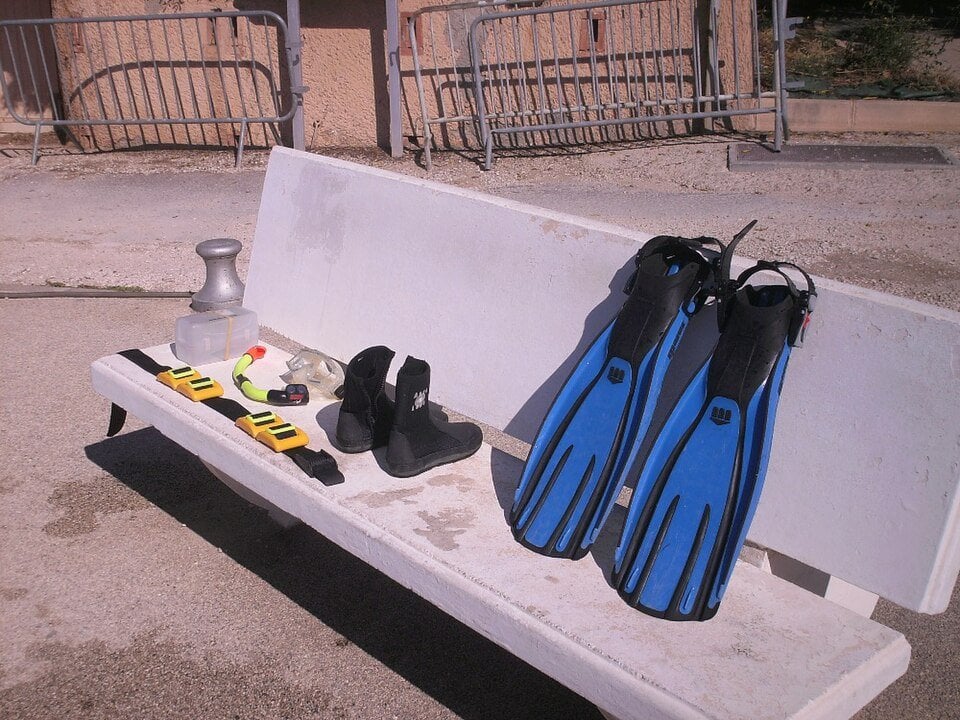
Bag types
| Type | Advantages | Disadvantages |
|---|---|---|
| Mesh deck bag | Light, dries quickly, water drains out; equipment can be rinsed in the bag | Does not protect against knocks or dust; everything is visible |
| Diving backpack | Hands free on docks and ladders, compartments | Limited volume, not well suited to the BCD and long fins |
| Large duffel bag | Large volume, robust, coated fabric | Heavy to carry when full, dries slowly |
| Wheeled bag | Ideal for travel and on docks, protects equipment | Heavy when empty; wheels useless on sand and on deck |
| Dry bag (roll-top) | Keeps clothes, documents and electronics dry | Not suitable for wet equipment |
| Plastic crate | Robust, easy to clean, stackable | Bulky, often refused on small boats |
Selection criteria
- Size suited to the boat: ask the dive centre or club how much space is available; large crates are rarely welcome.
- Materials: coated fabric or tarpaulin resistant to salt water, plastic zips (they do not rust), drainage eyelets.
- Compartments: a separate pocket for the regulator and dive computer prevents knocks; a ventilated pocket for wet fins and boots.
- Carrying: padded shoulder straps, strong handles to pass the bag from the dock to the boat.
- Identification: distinctive colour or tag, name and phone number.
What to pack
| In the water | On the boat, kept dry |
|---|---|
| Mask (and spare mask), snorkel | Towel or poncho, warm clothes, windbreaker |
| Fins, boots | Drinking water, snacks, sun protection (cap, sunglasses, reef-friendly sunscreen) |
| Wetsuit, hood, gloves | Certification card, medical certificate, logbook |
| BCD, regulator, dive computer | Personal medication, seasickness treatment as advised by your doctor |
| Weights, DSMB, line cutter, light | Phone and documents in a dry bag |
| Spares kit: O-rings, mask strap, anti-fog, cable ties, regulator wrench |
Pack your bag the day before with a list, always in the same order: what you will use last at the bottom, the mask and dive computer on top.
On the boat
- Stow the bag where the crew tells you, closed, leaving nothing lying around on deck.
- Keep within reach what you will need during the trip (water, warm clothes, sun protection).
- After the dive, put the wet equipment in the mesh bag and the dry items in the dry bag.
- Ashore, empty the bag and rinse the equipment in fresh water, then leave the bag open to dry.
Some manufacturers
Non-exhaustive list, in alphabetical order, with no ranking and no sponsored or affiliate links. Most general manufacturers offer diving bags; check the current range on their website.
| Manufacturer | Official website |
|---|---|
| Aqualung | aqualung.com |
| Beuchat | beuchat.fr |
| Cressi | cressi.com |
| Mares | mares.com |
| Scubapro | scubapro.com |
| Seac | seacsub.com |
| Tusa | tusa.com |
Key takeaways
- A bag suited to the space available on the boat, resistant to salt water.
- A mesh bag for wet equipment, a dry bag for dry items.
- A list prepared the day before prevents forgotten items.
- Nothing lies around on deck: the bag stays closed and stowed.
Further reading
The guides on water entry and on briefings describe how a boat dive unfolds. The diving clothing guide helps you choose what to wear at the surface.
Sources
- FFESSM – French Federation for Underwater Studies and Sports · consulted on 9 November 2026
- French Ministry of the Sea – Maritime surveillance and rescue · consulted on 9 November 2026